

Kawau was settled by descendants of Toi and migrants from the Arawa and Tainui waka. The island, a valued shark fishery, was abandoned in the 1820s but re-inhabited in the 1830s. James Forbes Beattie of the North British Australasian Loan and Investment Company bought Kawau in 1840. Following discovery of copper, a mine was opened on the south coast in October 1844. After problems with combustion of the ore in transit to Wales and Australia, tenders were called in late 1848 for erection of what was the first smelting house in the colony, a building designed by early Auckland architect Walter Robertson.
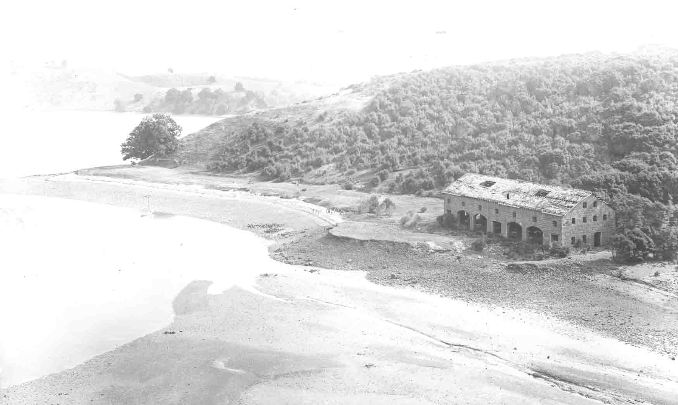
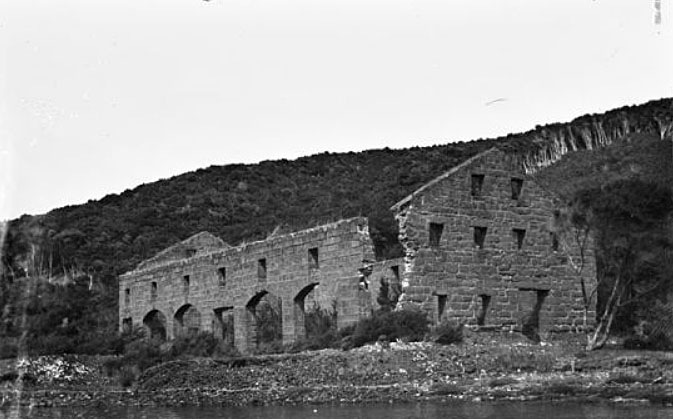
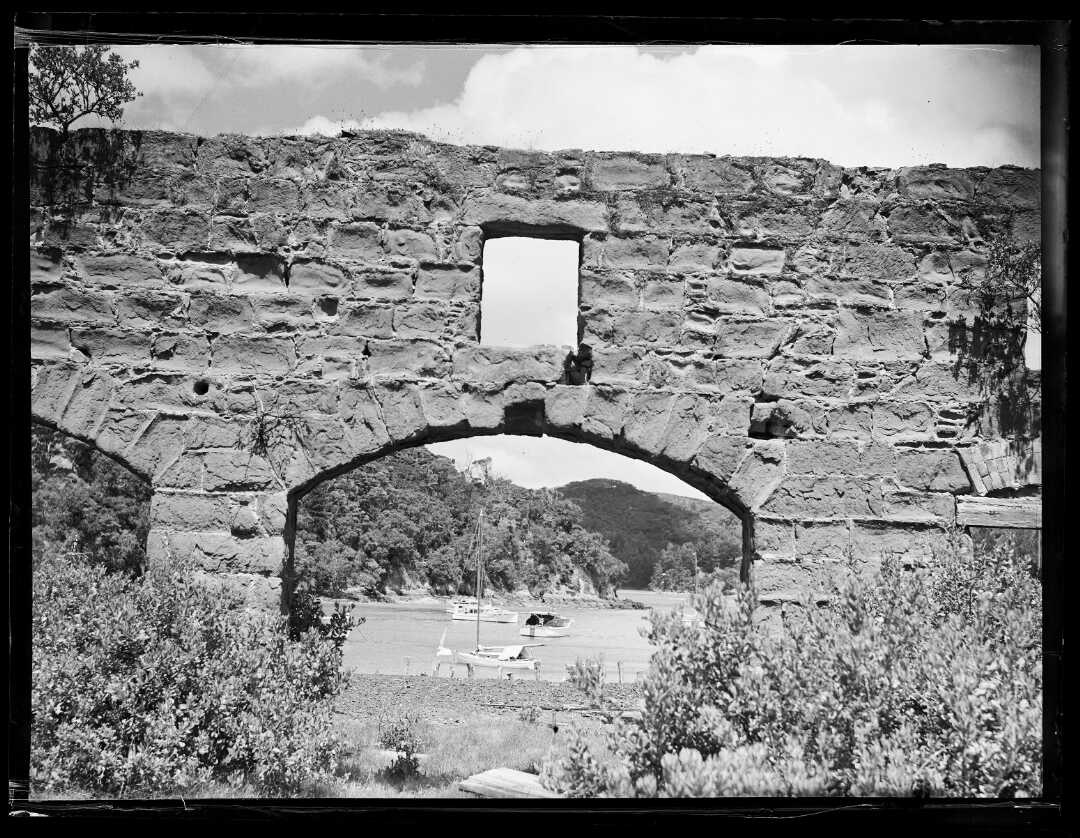
The simple, fireproof structure, one of only two known buildings with walls erected entirely of Waitemata sandstone, was in operation by early July 1849. The 600mm-thick walls were soft Mahurangi sandstone, quarried from the Matakana River mouth and bonded with lime mortar. Part of floor of the gable-roofed structure with two brick chimneys was formed of blocks of slag from the four smelting furnaces. An associated roasting house with eight furnaces was demolished after ore-burning outdoors proved more efficient.
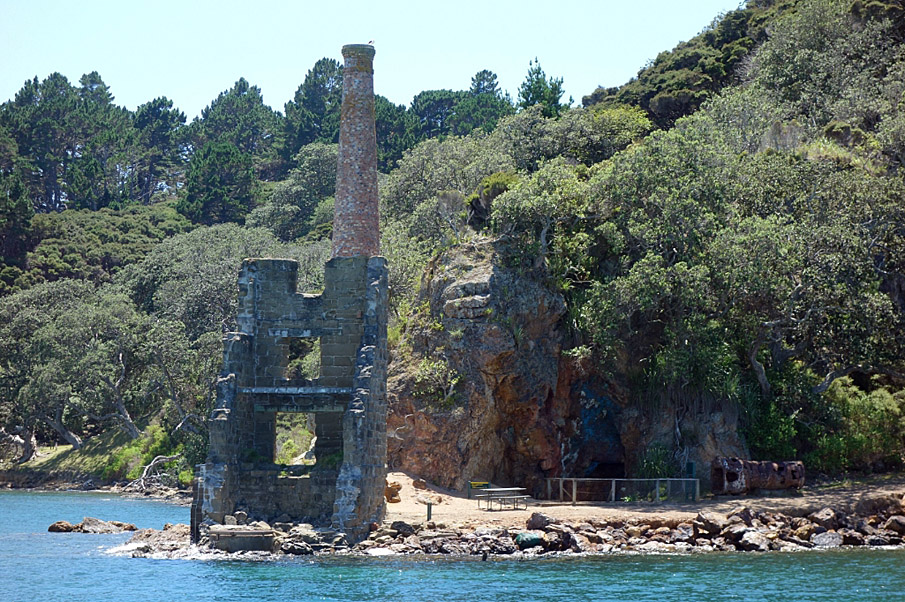
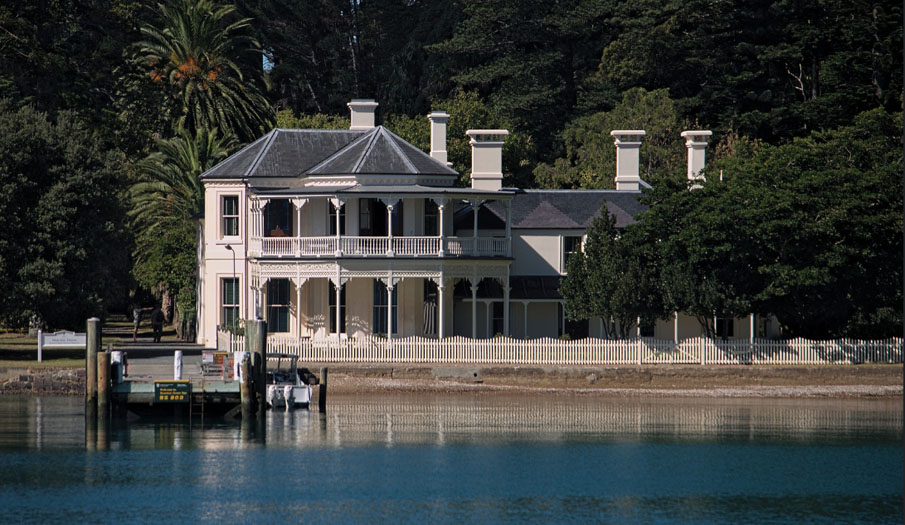
The smelting house was out of repair by September 1855 shortly before the mine closed. After Governor George Grey purchased Kawau in 1862, the building briefly held Maori prisoners from the Rangiriri campaign of the Waikato War (1863-4) following growing public concern regarding the ongoing incarceration of the men in the hulk of the Marion. The prisoners escaped from Kawau soon after their transfer there, and eventually returned to the Waikato. Demolition materials including bricks from the chimneys were used in a number of nineteenth-century projects on the island, including substantial 1860s additions to the former mine superintendent’s house (Mansion House). The smelter house roof had been removed by 1907, but stone walls remained intact in 1926. The site, purchased as a reserve in 1977 following threat of demolition, was recognised as a Category 1 historic place in 1983. Commencing in 1988, temporary timber shoring was installed, walls were grouted and capped, and deteriorating stone blocks were selectively replaced. Archaeological test excavations were carried out in 1987 (smelter house) and 1990 (roasting house). A conservation plan, prepared in 1995, recommended that the structure be retained in its existing form (approximately fifty per cent of the walls remained standing). A roof was later built over the site of the former roasting house. The ruins currently (2015) consist of standing portions of three elevations.
List Entry Information
Status
Listed
List Entry Status
Historic Place Category 1
Access
Able to Visit
List Number
10
Date Entered
24th November 1983
Date of Effect
24th November 1983
City/District Council
Auckland Council
Region
Auckland Council
Extent of List Entry
Extent includes the land described as Lots 277-278 DP 7675 (RT NA4C/1026, NZ Gazette 1982 p. 3395), North Auckland Land District, and the buildings and structures known as Smelting House Ruins thereon.
Legal description
Lots 277-278 DP 7675 (RT NA4C/1026, NZ Gazette 1982 p. 3395), North Auckland Land District
Status
Listed
List Entry Status
Historic Place Category 1
Access
Able to Visit
List Number
10
Date Entered
24th November 1983
Date of Effect
24th November 1983
City/District Council
Auckland Council
Region
Auckland Council
Extent of List Entry
Extent includes the land described as Lots 277-278 DP 7675 (RT NA4C/1026, NZ Gazette 1982 p. 3395), North Auckland Land District, and the buildings and structures known as Smelting House Ruins thereon.
Legal description
Lots 277-278 DP 7675 (RT NA4C/1026, NZ Gazette 1982 p. 3395), North Auckland Land District
Construction Professional
Name
Robertson, Walter
Type
Architect
Biography
No biography is currently available for this construction professional
Construction Details
Type
Partial Demolition
Description
Materials including chimney bricks used elsewhere
Period
1865-88
Type
Partial Demolition
Description
Roof removed
Period
c.1901-7
Type
Restoration
Description
Temporary shoring; grouting; capping; selected blocks replaced
Period
1988-
Construction Professional
Name
Robertson, Walter
Type
Architect
Biography
No biography is currently available for this construction professional
Construction Details
Type
Partial Demolition
Description
Materials including chimney bricks used elsewhere
Period
1865-88
Type
Partial Demolition
Description
Roof removed
Period
c.1901-7
Type
Restoration
Description
Temporary shoring; grouting; capping; selected blocks replaced
Period
1988-
Historical and Associated Iwi / Hapū / Whānau
Public NZAA Number
R09/642
Completion Date
13th February 2015
Report Written By
Joan McKenzie
Information Sources
Thornton, 1982
Geoffrey G. Thornton, New Zealand's Industrial Heritage, A.H. & A.W. Reed, Wellington, 1982
Clough, 1991
Clough, Rod, ‘The Archaeology of the Historic Copper Industry on Kawau Island 1843-1855, 1899-1901, Australian Historical Archaeology, Vol. 9, 1991
Other Information
This place was identified as significant under previous legislation with different information requirements. It remains significant under the current legislation. There is opportunity under our legislation and policies to add to this information. Further information about this place may be available from the Northern Regional Office of Heritage New Zealand Pouhere Taonga. Please note that entry on the New Zealand Heritage List/Rarangi Korero identifies only the heritage values of the property concerned, and should not be construed as advice on the state of the property, or as a comment of its soundness or safety, including in regard to earthquake risk, safety in the event of fire, or insanitary conditions. A fully referenced upgrade report is available on request from the Northern Regional Office of Heritage New Zealand.
Historical and Associated Iwi / Hapū / Whānau
Public NZAA Number
R09/642
Completion Date
13th February 2015
Report Written By
Joan McKenzie
Information Sources
Thornton, 1982
Geoffrey G. Thornton, New Zealand's Industrial Heritage, A.H. & A.W. Reed, Wellington, 1982
Clough, 1991
Clough, Rod, ‘The Archaeology of the Historic Copper Industry on Kawau Island 1843-1855, 1899-1901, Australian Historical Archaeology, Vol. 9, 1991
Other Information
This place was identified as significant under previous legislation with different information requirements. It remains significant under the current legislation. There is opportunity under our legislation and policies to add to this information. Further information about this place may be available from the Northern Regional Office of Heritage New Zealand Pouhere Taonga. Please note that entry on the New Zealand Heritage List/Rarangi Korero identifies only the heritage values of the property concerned, and should not be construed as advice on the state of the property, or as a comment of its soundness or safety, including in regard to earthquake risk, safety in the event of fire, or insanitary conditions. A fully referenced upgrade report is available on request from the Northern Regional Office of Heritage New Zealand.
Current Usages
Uses: Civic Facilities
Specific Usage: Historic or recreation reserve
Uses: Ruin
Specific Usage: Misc Archaeological
Former Usages
General Usage: Mining
Specific Usage: Smelter
Current Usages
Uses: Civic Facilities
Specific Usage: Historic or recreation reserve
Uses: Ruin
Specific Usage: Misc Archaeological
Former Usages
General Usage: Mining
Specific Usage: Smelter
Location
Sign up to hear more
Get the latest heritage news, features and events delivered
straight to your inbox.
